
Project Details
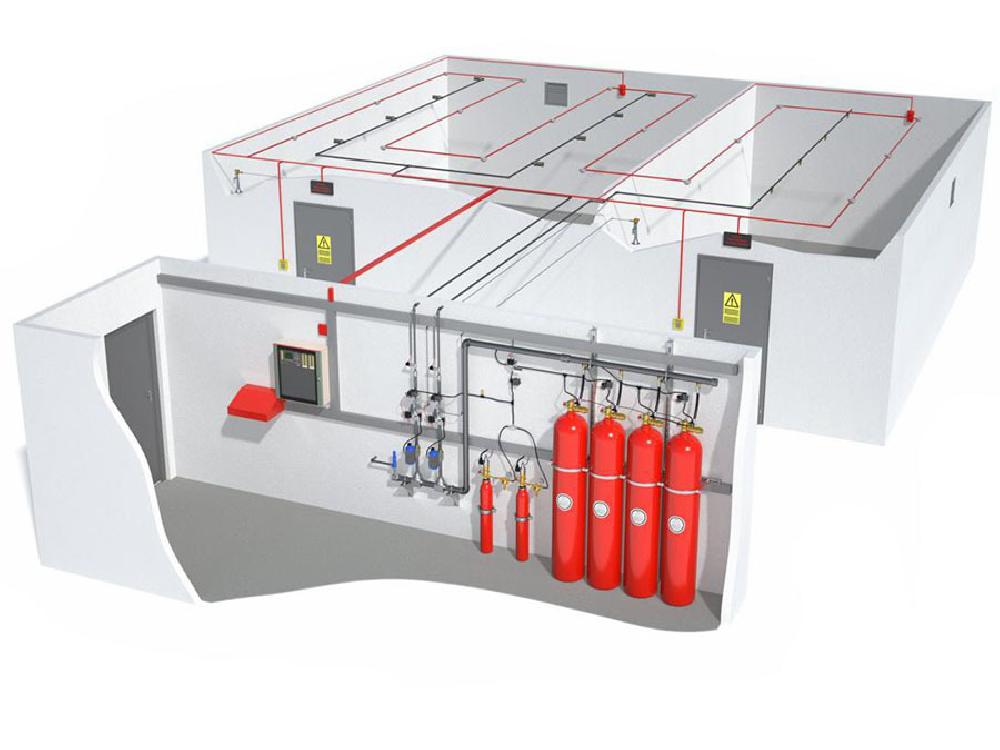
Fire Detection And Suppression System
A fire detection and suppression system is an integrated setup that automatically detects fires and then discharges a fire-extinguishing agent to control or put out the blaze without human intervention. It consists of sensors to identify heat, smoke, or flames, a control system to process these signals, and a suppression system that releases a fire-extinguishing media like water, foam, gas, or chemicals through pipes and nozzles to directly attack the fire source. Alarms are also activated to warn people and notify emergency services.
.Here are some key components and their functions:
1-Fire Detection System:
- Sensors: These devices monitor the environment for signs of fire, such as smoke, heat, and flames.
- Detection Methods: Depending on the application, these can include smoke detectors, heat detectors, flame detectors, or linear heat-sensitive tubing.
2-Fire Suppression System:
- Activating Device: Once a fire is detected, the system activates. .
- Extinguishing Agent: The system releases a fire-extinguishing agent to combat the fire. Common agents include water, foam, dry chemicals, wet chemicals, inert gases, or aerosols.
- Delivery Mechanism: A network of pipes, nozzles, or specialized delivery devices disperses the agent to the fire.
3-Control & Alarm System:
- Control Unit: This unit interprets signals from the detection sensors and triggers the suppression system.
- Alarm & Monitoring : Audible alarms, flashing lights, and messages to emergency services are activated to provide immediate warnings and notify authorities